The quality of a design brief directly shapes the quality of the first design proposal. A designer working from a clear, detailed brief produces concepts that are relevant, feasible, and personalised from the first iteration. A designer working from a vague brief — "make it look nice, we'll sort out the details later" — produces generic concepts that require multiple rounds of correction before they start feeling like your home. Writing a good brief takes 30 minutes. Getting a design back to right after a vague start takes weeks.
Section 1: Who Lives in This Home
Start with household composition — adults, children with ages, whether grandparents or extended family visit regularly. This shapes every functional decision: storage quantities, accessibility of shelving, study space requirements, separate sleeping zones, bathroom access patterns.
Include specifics that a designer couldn't guess: if both adults work from home, two distinct study zones need to be designed into the plan. If there are young children, low-cabinet hardware choices matter. If a parent with mobility constraints visits regularly, bathroom grab rail positions and corridor clearances become part of the brief. If pets live in the home, flooring scratch-resistance and easy-clean surfaces become real considerations.
The designer cannot ask for information they don't know they need. Share household context proactively, and the design will address your actual life rather than a generic version of it.
Section 2: Lifestyle and Daily Routines
How you actually use your home determines what needs to be designed carefully versus what can be standard. Questions worth answering in your brief:
Do you cook daily, and for how many people? (Determines kitchen storage volume, counter space, and whether a breakfast bar or dining connection makes sense.) Do you host guests frequently — overnight or for dinner parties? (Determines guest bedroom scope and living room seating capacity.) Is the home your primary workspace? (Determines study space priority, cable management, and lighting requirements.) Do you have hobbies that need dedicated space — music, art, home gym, crafts?
The more specific this section, the more directly useful the design. "We host large family dinners on weekends" is actionable. "We entertain sometimes" is not.
Section 3: Room-by-Room Functional Requirements
Go through each room and list what it must do. Not aesthetics — function. For the kitchen: how many people cook simultaneously, what appliances must be accommodated, do you bake (requires specific storage for a stand mixer, baking trays, and cooling racks), is there a separate utility/wet area for washing. For bedrooms: how much hanging space is needed (daily garments, formal wear, occasion wear), do you need a study zone within the bedroom, what's the sleeping arrangement. For the living room: does it need to accommodate a home theatre setup, is there a pooja space requirement, does it serve as a children's play area.
This section is where the most common brief gap occurs: homeowners describe how they want rooms to look without specifying what those rooms need to do. A wardrobe that looks beautiful but doesn't have the right internal configuration for the actual clothing that goes in it fails its primary job. Function first — aesthetics serve function, not the other way around.
Room-by-room functional requirements are the most valuable part of any brief — they prevent generic designs.
Section 4: Style References
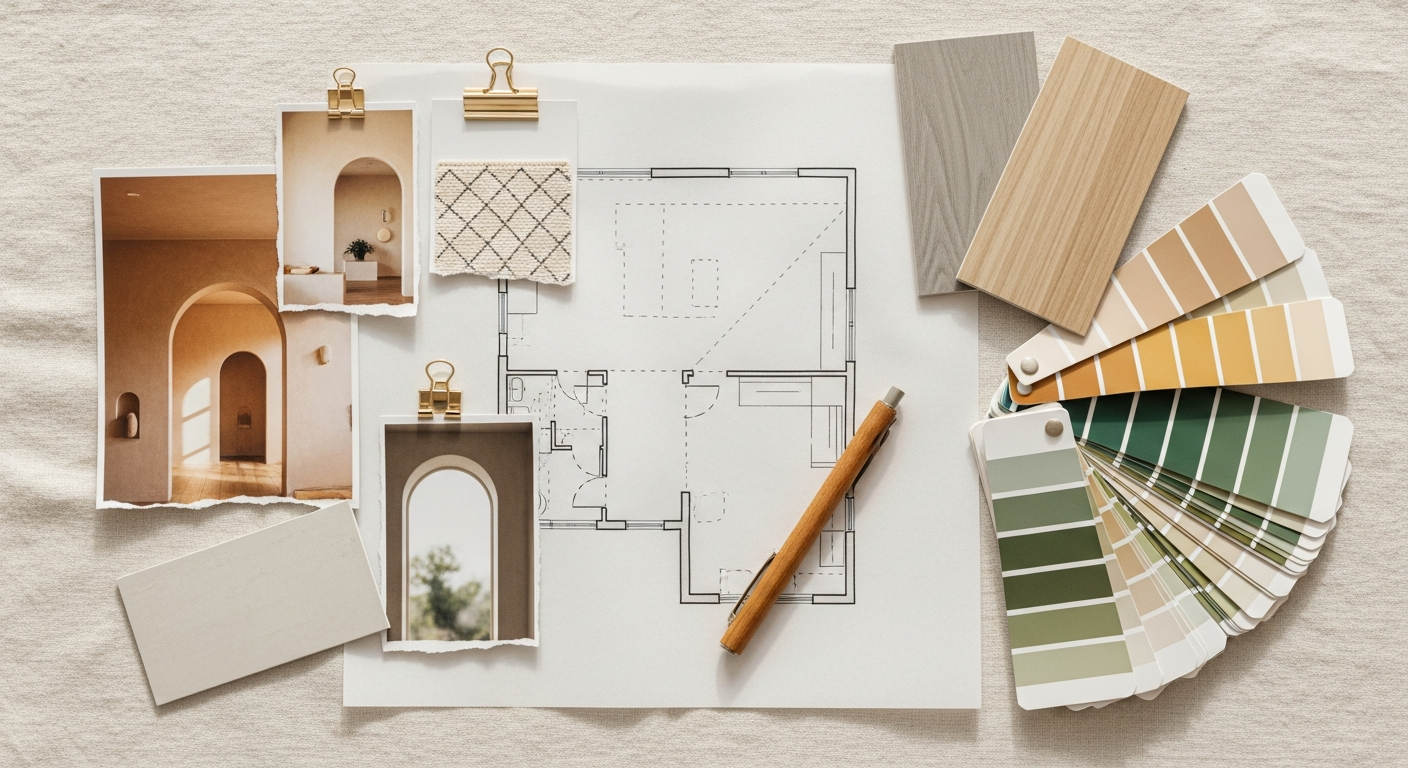
You don't need to know interior design vocabulary to communicate your taste. Collect 5–10 images — from Instagram, Pinterest, architectural magazines, hotels, restaurants, anywhere — of spaces that gave you a positive emotional response. A feeling of calm, of warmth, of elegance, of energy — whatever resonated. Share these images with a note about what specifically you liked: the colour palette, the ceiling treatment, the kitchen layout, the overall mood.
Also collect anti-references — spaces you actively don't like. "Not this" is as useful as "like this," especially when you can articulate why: too cold, too dark, too busy, too formal.
Be honest about whether there are contradictions in your references — some people are drawn to both minimalist Nordic images and richly layered Indian traditional ones. A good designer can synthesise these into something coherent; but they need to know the apparent contradiction exists so they can discuss it with you rather than arbitrarily choosing one direction.
Section 5: Budget Range
Name a range. Not a vague "reasonable" or "not too expensive" — an actual number or range that represents the upper boundary of what you're prepared to invest in this project. If you're uncertain what a realistic range is for your project size, use our interior budget guide to calibrate before your meeting.
The budget shapes every material choice, every finish decision, every scope inclusion. A designer who knows the budget can design the best possible outcome within it. A designer who doesn't know the budget is guessing — and the proposal they produce may be entirely misaligned with what's actually feasible.
Section 6: Non-Negotiables and Absolute Preferences
List anything that's firm: a specific material you must have (or must avoid), a layout configuration that's already decided (perhaps the kitchen cannot be changed because it's a resale flat), a room that must have a particular treatment (the pooja room must be a specific design), or a timeline constraint (must be complete before a specific family event).
Separating firm constraints from preferences gives the designer the right information about where flexibility exists and where it doesn't. This prevents the common frustration of receiving a design that changes something you considered obvious, or being offered options in an area you assumed was locked.
Once you have your brief prepared, read our first consultation guide to understand how that meeting will use your brief, and our 3D visualisation guide to understand the next major milestone after briefing.
Ready to Share Your Brief?
Book a free consultation. Our team will help you refine your brief into a design concept in our first meeting.
Frequently Asked Questions
That's fine, and more common than you'd think. Rather than trying to name a style, collect reference images — from Instagram, Pinterest, magazines, or photos you've taken in hotels, restaurants, or friends' homes — of spaces that gave you a positive feeling. Even 5–6 images that you genuinely like, without a clear common thread you can name, give a designer significant information about your taste. The pattern is usually there; the designer's job is to find it.
Yes, always. The budget is not a negotiating position — it's the primary constraint that shapes everything: scope, material tier, finish quality, and what's feasible versus aspirational. Withholding budget information from a designer results in a proposal that may be far above or below what was actually possible, wasting everyone's time. Give the designer a realistic range; they'll tell you what's achievable within it and what would require adjustment.
As specific as you can be on functional requirements, and as open as you like on aesthetic details. 'The kitchen needs to accommodate two cooks simultaneously' or 'the children's bedroom needs a study zone for two children' are functional requirements that directly shape design decisions. Aesthetic details like colour preference or hardware style are easier to iterate on once the designer has a direction — these don't need to be locked in the brief.