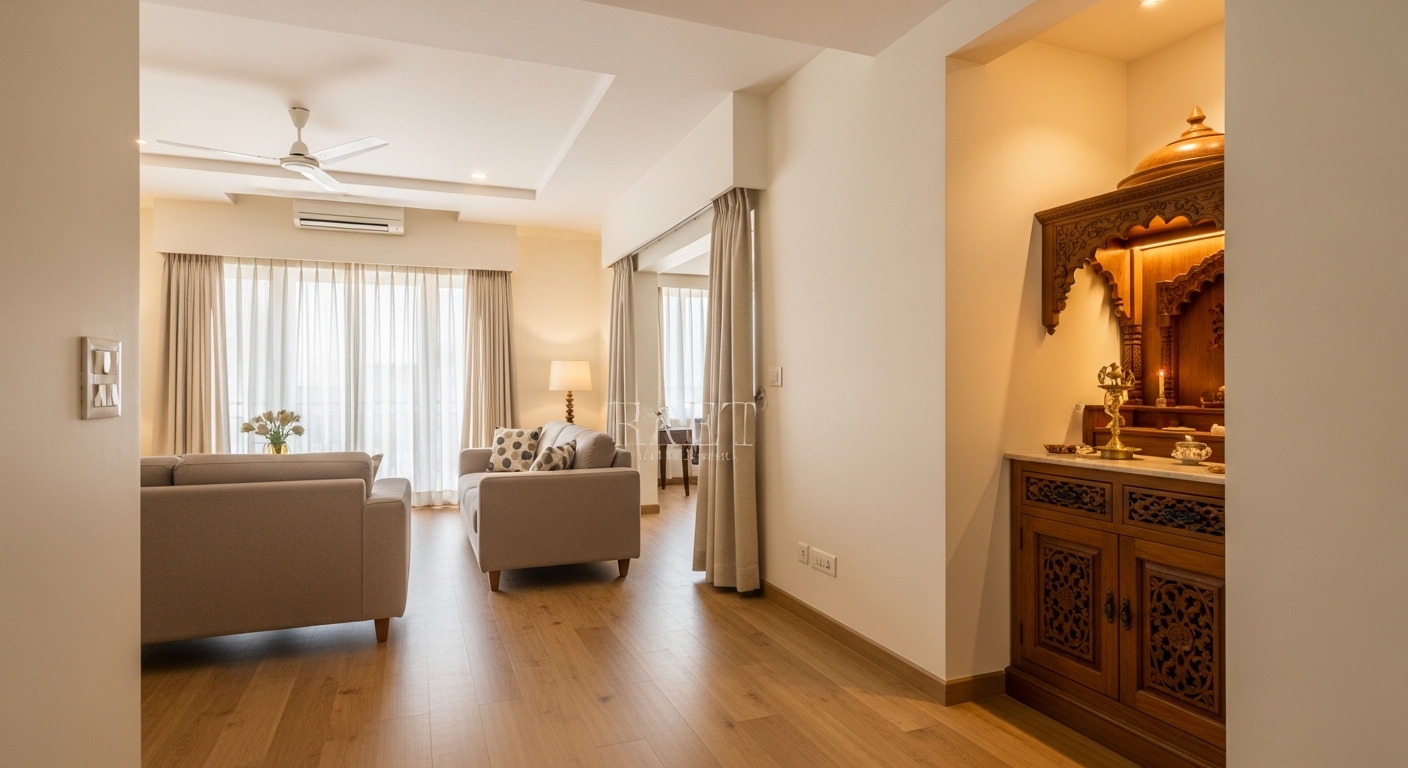
Vastu Shastra is taken seriously by a significant proportion of Bangalore homeowners — and rightly considered as a design input rather than a structural constraint. The practical reality of apartment living is that many Vastu principles that apply to standalone homes (building orientation, plot shape, main gate direction) are outside a resident's control. What can be applied through interior design choices is genuinely meaningful, and this guide focuses on exactly that: the Vastu decisions that are achievable within the fixed structure of a Bangalore apartment.
Kitchen — Direction and Hob Position
Vastu prescribes the southeast as the ideal kitchen location, governed by Agni (fire). In a builder-delivered apartment, the kitchen position is fixed. However, within the kitchen, interior design decisions can align with Vastu principles.
Hob position: Place the cooking hob on the eastern or southeastern wall so that the cook faces east while cooking. Vastu associates east with the rising sun, auspicious energy, and health. This is often achievable within a standard L-shaped kitchen layout by positioning the hob module on the longer eastern wall.
Sink position: The sink (representing water) ideally belongs on the north or northeast side of the kitchen. In most apartment kitchens, the sink position is influenced by the builder's plumbing rough-in position, but a good designer can position the kitchen layout to respect this where the plumbing allows.
Colour: Warm, fire-associated tones — saffron, terracotta, warm yellow, or even a bold red on one accent wall — are Vastu-aligned in the kitchen. These tones also work well aesthetically with natural wood kitchen shutters and warm countertop materials, making them easy to incorporate without visual compromise.
Master Bedroom — Direction and Sleeping Position
Vastu prescribes the southwest as the ideal master bedroom location (associated with stability, longevity, and the head of the household). The most directly actionable Vastu principle in the bedroom is sleeping direction: the head pointing south or east.
Bed orientation: This is entirely within the interior designer's control and costs nothing to specify correctly. Position the bed so the sleeping person's head points south (associated with peaceful sleep and positive energy flow) or east (associated with good health and spiritual focus). Avoid head pointing north — this is the most widely cited Vastu concern for bedrooms.
Mirror position: Vastu advises against mirrors facing the bed directly. In the master bedroom, position dressing mirrors on the side walls or inside wardrobe doors (open only when in use) rather than facing the sleeping area. This is also good design practice — mirrors directly opposite windows can cause uncomfortable glare in Bangalore's bright mornings.
Colour: Soft, earthy tones — warm creams, pale terracotta, dusty rose, light olive — are Vastu-aligned for the master bedroom and also represent good design choices for creating a restful atmosphere. Avoid dark blue or black as dominant bedroom colours.
Pooja Room — The Northeast Corner
The northeast (Ishan) corner is considered the most auspicious direction in Vastu and the prescribed location for the prayer room or altar. In modern apartments, a dedicated pooja room is often feasible in a 3BHK or larger property. In a 2BHK, a dedicated pooja unit is the practical alternative.
Placement: Locate the pooja unit in the northeast corner of the home where possible. If the northeast area of the flat is a bedroom or bathroom (which cannot be moved), the next alternative is east or north. Avoid locating the pooja area under a staircase, adjacent to a bathroom wall, or on the south or southwest side of the home.
Design: A pooja unit with a wooden cabinet, marble or granite shelf, backlit niche, and dedicated above-unit lighting creates a considered, respectful space. The use of natural materials — wood, stone, brass hardware — is consistent with both Vastu principles and good design. Many clients include a small skylight or position the pooja in a corner that receives natural morning light from the east, which satisfies both Vastu and functional aspirations.
Living Room — Furniture Arrangement and Colours
The living room in Vastu terms is primarily about energy flow — space should feel open, well-lit, and unobstructed. The northeast portion of the living room should remain relatively clear and light (a plant or water feature is appropriate here). Heavy furniture and storage should be positioned on the south or west walls.
Sofa placement: Position the main seating grouping facing north or east, with the primary sofa against the south or west wall. This allows occupants to face north or east while seated — Vastu-aligned and naturally comfortable for conversation and TV viewing.
Colour palette: For the living room, Vastu favours warm neutrals, cream, yellow, and light green. These tones also align well with the warm minimal aesthetic that works best in Bangalore's natural light conditions — a convergence that makes Vastu and design preferences relatively easy to reconcile.
Entrance and Shoe Rack
The entrance is Vastu's most discussed area — it is the home's primary energy intake point. A north or east-facing entrance is considered most auspicious. For apartments, the entrance direction is fixed by the floor plan, but the treatment of the entrance can support Vastu principles.
Entrance treatment: Keep the entrance well-lit (a pendant or track light at the foyer), clutter-free, and welcoming. A shoe rack with a closed-door design (so shoes are not visible) is Vastu-correct and also good interior practice — an organised, concealed shoe storage unit near the entrance sets the tone for the home.
What to avoid at the entrance: Broken or non-functional items, cluttered shoe piles, dark or poorly lit foyers, mirrors directly facing the front door (they are said to reflect energy back out), and obstructed pathways from the front door to the interior.
Colours, Materials, and Vastu
Vastu associates specific directions with specific elements and colours: north with green (water/prosperity), east with white or cream (health/sunrise), southeast with red or orange (fire), south with yellow or orange (earth/warmth), southwest with earthy brown or beige (stability), west with blue or grey (air/creativity), and northeast with white, cream, or light yellow (purity/spirituality).
In practice, these colour directions inform wall paint selections in each room and are easy to accommodate without conflicting with a well-considered design palette. A cream-and-warm-wood apartment — already the most popular interior aesthetic in Bangalore — aligns broadly with Vastu colour principles for the majority of rooms.
The Nexus Approach to Vastu
Our design team works with Vastu preferences as a brief requirement, not a structural obstacle. Most Vastu principles applicable to apartment interiors — bed orientation, hob position, pooja corner, entrance treatment, furniture placement, colour selection — are accommodated within the standard design process without adding time or cost. Where a client has a specific Vastu consultant whose guidance must be followed, we work from those specifications directly. Our role is to implement the Vastu framework within a design that is also visually excellent and functionally efficient.
Want an interior that honours Vastu principles without compromising on beauty?
Frequently Asked Questions
In an apartment, the kitchen location is fixed by the builder's floor plan — you cannot physically move it. Vastu practitioners typically recommend directional corrections within the kitchen: positioning the hob on the southeast wall so the cook faces east, using fire-associated colours (reds, oranges, or warm yellows) on one kitchen wall, and ensuring the water source (sink) is on the north or northeast side of the kitchen. These interior-level adjustments are achievable without structural changes.
Vastu associates specific colours with specific directions and energies — green with north (prosperity), yellow or cream with southeast (fire/energy), blue or white with east (health), and so on. Whether you believe in the metaphysical basis or not, the colour recommendations often align well with good interior design principles — warm tones in active spaces, cool or neutral tones in rest spaces. They are easy to incorporate without compromising the visual quality of the design.
We incorporate Vastu preferences into the brief the same way we incorporate any other functional requirement — as a set of constraints and priorities that the design should respect where possible. We work around the fixed elements of your flat (structural walls, existing plumbing, builder-determined room positions) and apply Vastu-informed decisions to the elements we can control: furniture orientation, hob position, pooja room location, colour selection, and entrance treatment. We don't override Vastu preferences; we design around them.