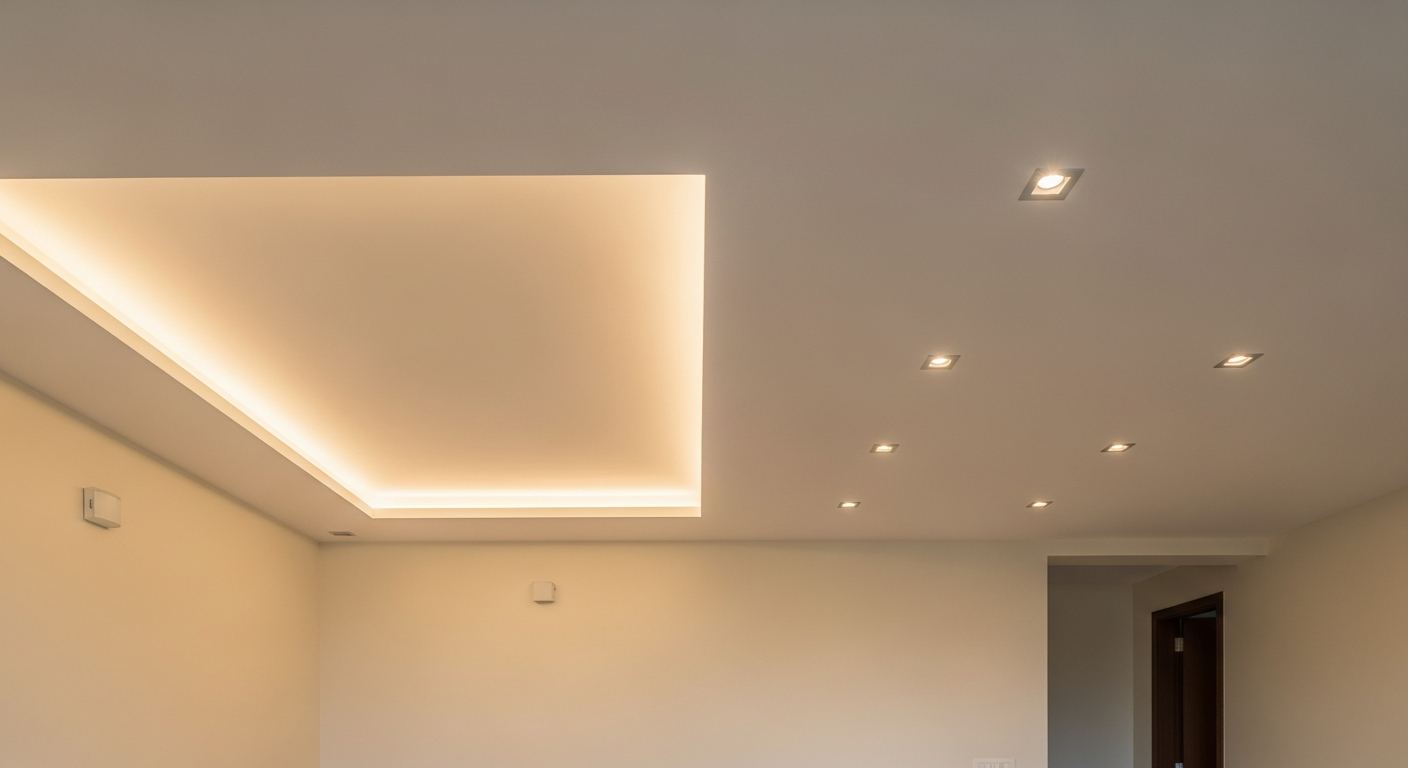
Lighting design is the most underrated element of interior design. Move through the same room at midday under natural light, at 7pm under recessed downlights, and at 10pm under cove lighting, and you're inhabiting three genuinely different emotional environments. Understanding cove and recessed lighting — what each does, where each belongs, and how to combine them — gives you real control over how your home feels at every hour.
What is Cove Lighting?
Cove lighting is indirect. An LED strip is hidden inside a recessed channel (the "cove") in the false ceiling, positioned so the light bounces off the ceiling surface rather than shining directly downward. What you see is not the light source — you see illuminated ceiling, which fills the room with soft, diffused glow.
The effect is warm and enveloping. Cove lighting makes a room feel larger than it is because it illuminates the ceiling plane, visually pushing it away. It eliminates harsh shadows. It creates the sensation of ambient daylight even in the evening. When cove lighting is the primary light source in a living room, the room looks like a film set for a quiet evening scene.
The limitation: cove lighting alone is not bright enough for tasks. Reading, cooking, applying makeup — these activities need direct, focused light. Cove works as ambient fill, not as the only light source.
What is Recessed Lighting?
Recessed downlights (also called spotlights or pot lights) are embedded into the false ceiling and point directly downward. They're the functional workhorses of interior lighting — bright, directional, and precise.
A well-placed recessed light over a kitchen countertop illuminates the prep surface without creating shadows. A downlight at the end of a corridor makes the passage feel welcoming rather than dim. Recessed lights above a study desk provide the right brightness for focused work without the glare of a desk lamp.
The limitation: too many recessed downlights in a room create an "office ceiling" effect — flat, evenly bright, and devoid of atmosphere. This is one of the most common lighting mistakes in Bangalore apartments: a grid of eight downlights across the living room ceiling creates functional but emotionally flat illumination.
When to Use Each
Use cove lighting for: Living rooms (primary ambient source for evenings), master bedrooms (relaxation lighting before sleep), dining areas (atmosphere during meals), home offices (soft ambient fill combined with task light), and any space where evening comfort is the design priority.
Use recessed lighting for: Kitchens (task lighting over countertops and the cooking area), study rooms (focused desk lighting), bathrooms (general illumination and mirror lighting), corridors and entryways (welcoming but functional), and any zone where you need to see clearly and accurately.
The nuanced cases: Bedrooms can have both — cove for the relaxation mode, recessed over the wardrobe area or reading zones. Living rooms often need both — cove for ambient and 2–3 recessed above the main seating for reading tasks. Dining rooms are the exception where neither cove nor recessed is ideal as the primary source — a pendant over the dining table creates the most appropriate intimate atmosphere.
The Combination Approach — What We Recommend
The most sophisticated lighting designs layer both types, with each fulfilling a different role:
Living room: Peripheral cove at warm 3000K for ambient glow. Two or three recessed lights positioned above the main seating zone for reading. Potentially one recessed light in the ceiling directly above the coffee table to create visual focus on the seating arrangement.
Kitchen: Recessed downlights at 4000K over the cooking and prep countertop. LED strip under the wall cabinets at 4000K for countertop task illumination from below. Recessed at the sink position. No cove in the kitchen — the ceiling height is usually lower and functional lighting takes priority.
Master bedroom: Peripheral cove at 3000K for evening relaxation. A recessed light or adjustable spotlight positioned to illuminate the wardrobe area. Two bedside reading provisions — either individual recessed lights controlled from the bedside or adjustable wall-mounted reading lights.
Dining area: A pendant light as the primary source over the table. Cove lighting in the adjacent living area provides ambient fill that reaches the dining zone without additional lighting needed.
Kitchen lighting at 4000K neutral white — recessed over countertops and under-cabinet strips for task illumination.
LED Quality Is the Deciding Factor
The cove lighting glow you've admired in premium showrooms and hotel lobbies is not just a design feature — it's the result of consistently high-quality LED strips running at the right specifications. Cheap LED strips installed in identical cove designs create completely different results: uneven brightness, colour variation across the length of the strip, and failure within 12–18 months.
For cove lighting in residential interiors, specify LEDs from brands like Philips, Havells, or Wipro in the correct wattage per metre for your ceiling height. The industry standard for a 9-foot ceiling cove is 14–18W per metre at 3000K. Higher wattage per metre doesn't automatically mean better — it means brighter, which can create harsh hotspots in a narrow cove channel.
Dimmer switches are worth the addition. Cove lighting on a dimmer allows you to adjust from full ambient brightness (for social evenings) to a low, relaxing glow (for late-night winding down). The cost difference versus a non-dimmer circuit is modest; the lifestyle difference is significant.
This lighting guide connects to our false ceiling designs for living rooms and our guide to false ceiling materials. For penthouse and villa projects where lighting design becomes a primary architectural element, see our penthouse interior design page.
Design Lighting That Transforms Every Room
Lighting design is planned as part of our complete interior service. Book a free consultation to discuss your home's lighting needs.
Frequently Asked Questions
The LED strip itself is modest in cost. The primary expense is the false ceiling construction that creates the cove channel to house the strip — which you'd build as part of the false ceiling design anyway. Adding cove lighting to an already-planned false ceiling adds only the cost of the LED strip and the wiring, which is a small fraction of the overall ceiling cost.
Difficult without modification. A cove requires a recessed channel specifically built to conceal the LED strip and reflect light upward. If your existing false ceiling has no cove built in, adding one requires cutting into the gypsum and rebuilding a section. It's best planned during original ceiling construction. Retrofitting is possible but messy and expensive.
3000K warm white is the standard recommendation for living room and bedroom coves. It creates a golden, relaxing glow that feels natural in the evening. For study areas or home offices where cove lighting supplements task lights, 4000K neutral white provides better visibility without the clinical brightness of cool white. Avoid 6500K (daylight) for cove lighting — it's too harsh for residential use.